Bathing pond art installation opens at London’s King’s Cross
11-5-2015
The King’s Cross Pond Club, a naturally filtered outdoor swimming pool, is part of the redevelopment of King’s Cross in London. Soil and Water (the name of the project), will be the UK’s first man-made bathing pond that’s filtered using natural processes.
The pool is designed by studio Ooze Architects (Rotterdam) and Slovenian artist Marjetica Potrč. The pool is built two metres above ground level, with salvaged bricks and stones used to create a basin that measures 40 by 10 metres. The pool is both an art installation and a public facility and will be cleaned using wetland flora and submerged plants rather than chemicals or machinery. The local community participated in key aspects of the planting.
Swimming pool is located at London’s King’s Cross
It is located within the new Lewis Cubitt Park, close to the campus of design school Central Saint Martins, which forms part of the 27-hectare redevelopment of the area behind King’s Cross station. The swimming pool will open in May 2015.
“The project is an attempt to capture the dynamicity conveyed by the changes within the area, a moment in time where new possibilities and possible futures arise,” said architect Eva Pfannes, who co-founded Ooze with Sylvain Hartenberg. Architects Ooze and artist Potrč have been collaborating on projects since 2008. Ooze’s projects are of a participative and multidisciplinary nature. “The project is a small-scale enclaved environment, a living laboratory to test balance and to question a self-sustaining system including one natural cycle – water, land and the human body. The aim is communication with visitors, describing the balance of man with nature, and the balance of living in a sustainable city,” she continued.
The King’s Cross Pond Club is engineered and built by Europe’s leading natural pool designer BIOTOP and its UK partner, Kingcombe Aquacare Ltd. The pond will be operated as a swimming club by Fusion Lifestyle.
Kromkommer straight to the top
30-4-2015
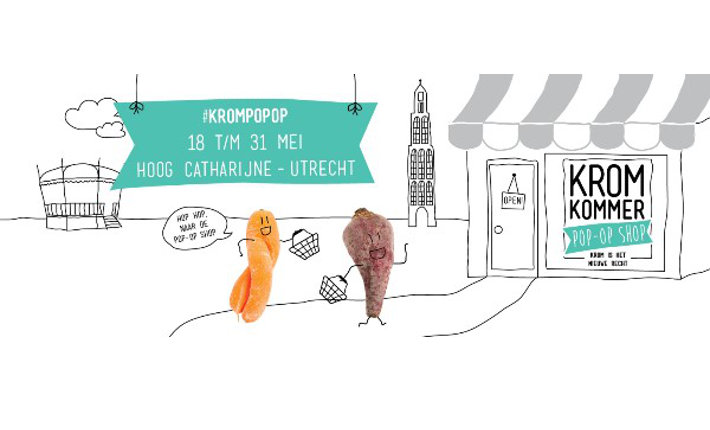
Exactly a year after the introduction of the Kromkommer soups, a pop-up store opens its doors in Utrecht Hoog Catharijne (the Netherlands). The shop is open from 18 until 31 May. Kromkommer is the first store in the Netherlands with weird shaped vegetables.
Straight to the top
Kromkommer makes sure that products aren’t wasted because of their looks. According to the estimates 5 to 10% of all the vegetables and fruits in the Netherlands are wasted because of their looks. That’s why Kromkommer makes sure the crooked vegetables and fruits that don’t fit the perfect picture come back to the plate in different ways. The founders Jente de Vries and Lisanne van Zwol started their quest in 2012 and soon after Chantal Engelen joined in the waste battle.
See our earlier article about Kromkommer and their crowdfunding campaign.
Pop-Op Shop
The Kromkommer Pop-Op Shop is a place where the story of weird shaped vegetables can be experienced in real life. You can find Kromkommer soups, weird shaped vegetable juices and green gadgets. Nearly all the products that can be found in the store, are recycled.
The Kromkommer Pop-Op Shop is besides a point of sale for weird shaped vegetables, a place for meetings. Growers tell stories about their product, retailers share their opinion about the waste of food and the Krommunity organizes workshops and lectures for the visitors. The Krommunity forms the backbone of the activities by Kromkommer.
On the birthday of the Kromkommer soup (25 May), the newest weird shaped vegetable soup ‘Koele Soep’ (Cool Soup) will be launched. They’re going straight to the top!
On-Air will be a new iconic building in Amsterdam
29-4-2015
Real estate developer COD, architecture, urbanism, and cultural analysis agency OMA / Rem Koolhaas, the NH Hotel Group and sustainable developer ‘Being Development’ have joined forces and came up with the ‘On-Air’ building as new icon for Amsterdam. It was the winning concept of the tender the municipality of Amsterdam and the RAI Convention Centre issued for the location in the south of the city.
About the alliance
COD developed two hotels in Amsterdam in 2015, Motel One at the Europa Boulevard (320 rooms) and Generator (168 rooms) at the Mauritskade. The recent projects of the OMA agency include the new headquarters for G-Star in Amsterdam (2014) and the towers of The Rotterdam (2013). The NH Hotel Group will implement the nhow-label at ‘On-Air’ with 650 rooms hotel. Being Development is a young and innovative company that develops the sustainable real estate from the end user’s perspective.
On-Air
The On-Air hotel is designed by OMA / Rem Koolhaas. It will include a restaurant, a TV studio, a spa / gym, shops and a sculpture garden. The sustainability ambition for the building will be ‘BREEAM outstanding’ and it will be carbon neutral. With 650 rooms nhow Amsterdam RAI will be the largest hotel of the Benelux. The start of the construction of this 91 meter high hotel is planned for midst 2016. The location is triangle bounded by the Europa Boulevard, the A10 and the Amsterdam RAI Convention Centre.
Prestigious landmark
The municipality of Amsterdam aims for a larger and more varied hotel offer and better spreading across the city. The new hotel and its facilities can be of great value to the city at this location on the south side of the city and the surrounding business district.
Serve Cuipo Water and help to make a difference
10-3-2015
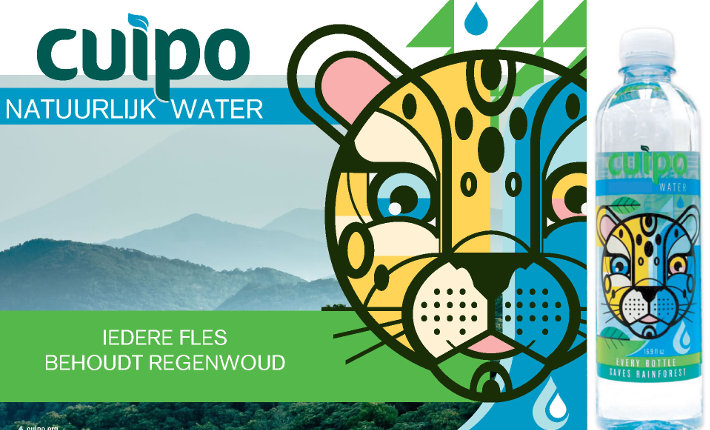
Drinking Cuipo Water is a way to make a difference. With every bottle sold, 1 square meter rainforest is protected and preserved. As from May Cuipo Water is also available in The Netherlands.
An innovative online concept
Due to the concept of Cuipo Water everyone can do something to preserve this planet for the upcoming generations. With every bottle sold, 1 square meter of rainforest is protected and preserved. This is how it works, at every bottle of Cuipo a code is printed, customers have to enter this code at the website of Cuipo and after registration with their email address, they can check ‘their’ square meter on Google Maps and share it through Social Media. With each bottle sold a donation is given to the foundation ‘One Meter at a Time’. This foundation already owns around 105 million square meters. The sustainable PET bottle is made of recycled PET and has a 65% lower carbon footprint. Cuipo water is available in 500 ml. and 330 ml.
Cuipo Water available in the Netherlands as from May
Hoo Koen Tan and Han Kamminga of ‘Water Concepts Benelux’ were introduced to the originally American brand, and decided to contribute on saving the rainforest by introducing Cuipo in The Netherlands. Hoo Koen: “With Cuipo we want to increase the awareness: we need to protect the rainforest. The Cuipo approach is fun and sustainable at the same time, which makes it accessible, effective and it actual contributes to the world. We all drink water, so for everyone this is the way to make a difference.”
Give your guests a great feeling
Selling Cuipo bottles to your guests is a great opportunity to do something good to the world in an easy way. According to the people behind Cuipo this is possible without losing on retail value and margins. An additional advantage is that guests sign up with their email address. ‘Water Concepts Benelux’ is the exclusive seller of Cuipo in West-Europe.
Cooking at solar power with the GoSun
27-2-2015
GoSun is the portable solar cooker for your nature outings and picnics.
About the GoSun
The Gosun crowdsourced through Kickstarter is available now. The GoSun manages to integrate its sun-powered technology in a highly-portable form factor, making it convenient to bring along. Designed for environmentally-friendly cooking, the stove uses nothing but sunlight as fuel, allowing you to cook a variety of food items, provided the sun is peeking from the sky. But you can use it next to your barbecue to make bread or prepare vegetables.
The GoSun is 2 feet long with a 2.25-inch diameter, it’s clad in the shape of a tube. To use, you place the food inside the cylinder-shaped cooking chamber, open the lid wide, and face it towards the sun. The mirrors retain the heat from the sunlight it catches. The only obstacle for the use of the GoSun is no sun, which might make it a problem in The Netherlands. Up to three pounds of food can be cooked at a time. The GoSun can be used for steaming, baking, frying, roasting and boiling.
The GoSun is trying to break the cycle of poverty
The GoSun is trying to save lives, protect the environment and empower communities around the World. Today nearly 3 Billion people cook with dirty fuel sources, such as wood, dung or charcoal. As a result, the second leading cause of death on earth is smoke inhalation related illness. With every 5 device sold, the people behind the GoSun donate 1 device to change the way they cook at poorer parts of the world. Check this video about the stove and their plans.
Creating great meals in the GoSun stove
As you can see in the video above they asked well known chefs to help them with creating new dishes with the stove. In the video above, the famous chef José Andrés is working with the GoSun.
Instock Toko & Truck on the barricades against food waste
19-2-2015
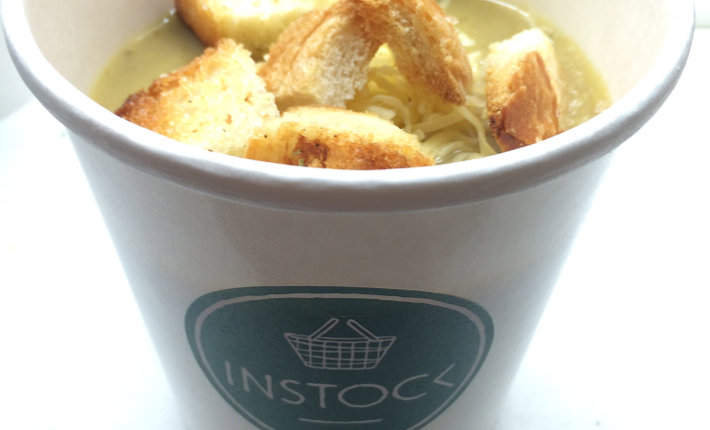
Instock comes up with a new take away shop (Instock Toko) and a mobile food truck (Instock Truck) to reduce food waste. The first initiative of Instock, a pop-up restaurant in Amsterdam, opened in June 2014. Like in this pop-up restaurant, the food served at the Instock Toko & Truck are made from products that otherwise would be wasted.
Instock Toko & Tuck
At the new take away shop, Instock Toko, they will offer warm meals, salads, soups and juices every day. They don’t work with a standard menu as the meals are made from the harvest of the day. Customers help to reduce food waste by buying a meal at the Instock Toko. The take away shop will open the doors tomorrow (20 February 2015) in Amsterdam.
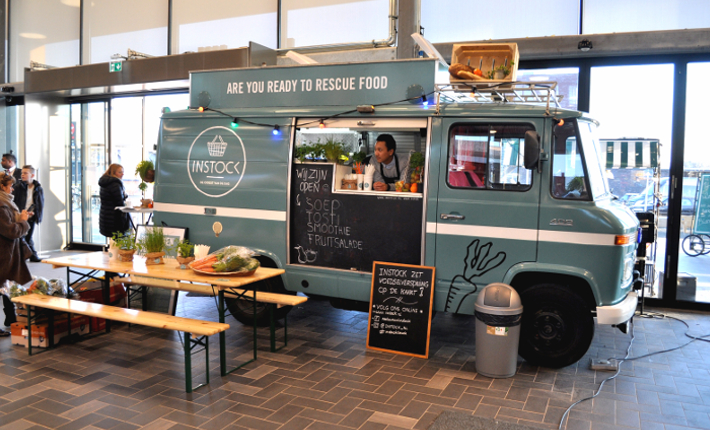
The Instock Truck is an old Mercedes Benz fire truck that has been turned into a green food truck. With this truck, the Instock team is able to make people aware of the food that is being wasted throughout the Netherlands. The food truck will be participating in several festivals this summer.
Food waste
Research shows that about 30 till 50 percent of our food is wasted. Throw away food does not only costs money, but also the energy consumed in the production, packaging, transportation and food preparation gets lost. Selma Seddik, Bart Roetert, Merel Laarman and Freke van Nimwegen, four employees of the Dutch supermarket chain ‘Albert Heijn’, came up with a plan to reduce food waste. While under employment at ‘Albert Heijn’ they got the opportunity to realise their plan. Now cars are driving along a number of AH supermarkets every morning. At those supermarkets they collect all the products that cannot be sold anymore, for example bread that’s one day old or fruit, vegetables and potatoes in a packages with damages. We wrote earlier about the pop-up restaurant, so if you want to know more about their pop-up restaurant, read this.
Wheelys, a full service café on wheels
5-2-2015
Wheelys is a full service café on wheels. The bike serves coffee, tea, cold drinks, juices, pastries, fruits, salads and sandwiches. Everyone can buy the bike and ride through the city, the only thing that you have to do is to pay a small monthly fee. We wonder how how it is regulated in these countries with the licenses.
Wheelys
There are several advantages of the café on wheels. You will have minimal startup costs, minimal running costs, it is ECO-friendly, healthy and very profitable. With one single Wheelys you can earn up to $700,= in one day. In the first four months that Wheelys has been around they sold more than 30 cafés to more than 10 countries.
The café was founded by Thomas Mazetti, former head of a successful advertising agency. He brought other thought leaders from Scandinavian superbrands like IKEA and H&M in to his team. Together they created Wheelys.
CORK2CORK sustainability initiative of the NH hotel group
22-1-2015
NH Hotel Group recycles two tons of cork in its hotels. The CORK2CORK initiative from the NH Hotel Group has so far yielded more than 1994 kilograms of recycled cork.
More than 75 hotels of NH Hotel Group in the Netherlands, Belgium, France, Spain, Italy and Germany have collected corks from wine bottles since the start of the project, which were then used for the construction and isolation of hotel walls and floors. This CORK2CORK makes a substantial contribution to the realization of the sustainability goals of NH Hotel Group.
CORK2CORK
CORK2CORK is part of the sustainability policy of the NH Hotel Group and has been rolled out in cooperation with Amorim, a global producer of cork and building materials of cork. It’s their goal to give a second life to bottle corks used in hotels by reusing it as construction and insulation material. The collected corks account for 8000m2 of wall and floor space used for the construction and renovation of more than 300 hotel rooms.
“We are very proud of the result of this Cork2Cork program. We have given a beautiful natural product a second life. This is one of the example projects which shapes our sustainability policy towards internal and external stakeholders,” said Mónica Chao Janeiro, Director of Environmental Management and Sustainability of NH Hotel Group. “The enthusiastic response and the beautiful result of this action motivates us to continue on this path with sustainability projects in our operations.”
Natural cork as material
After recycling natural cork, it is excellent to use for the production of wall and floor covering. Thanks to its insulating effect, cork is capable to counter sound effects and contribute to energy-efficient heating or cooling a building.
Food waste recycling Seattle
5-1-2015
In Seattle it is no longer allowed to throw food and food waste in the bin from 1 January onwards. Enforcement of the new rule will start from July, which implicates that each standard family bin that contains more than 10% recyclable and / or food waste will receive a $ 1,- fine on the next waste bill. Multi-family property owners with too much food waste in trash will get a $ 50, – fine after two warnings.
Recycling for companies
This system of warnings and fines applies to all companies. Before, there were only food recycling rules for catering establishments. Bins in (public) eateries used by consumers are excluded if there are sufficient alternatives to recycle food waste.
Waste target of Seattle
Seattle has set a target to recycle 60 percent of waste in 2015 and is putting effort in achieving this. In 2013 they achieved a recycling percentage of 56%, the city dumps 100,000 tons of food waste in landfills annually. With this new law, Seattle want to divert 38.000 tons of food waste from landfills into composting.
Wine from a Tube
29-12-2014
Dijkwijn is a label by Nouvino, a new player in the wine arena in the Netherlands that makes “enjoying quality wine durable and affordable by out-of-the-box thinking.”
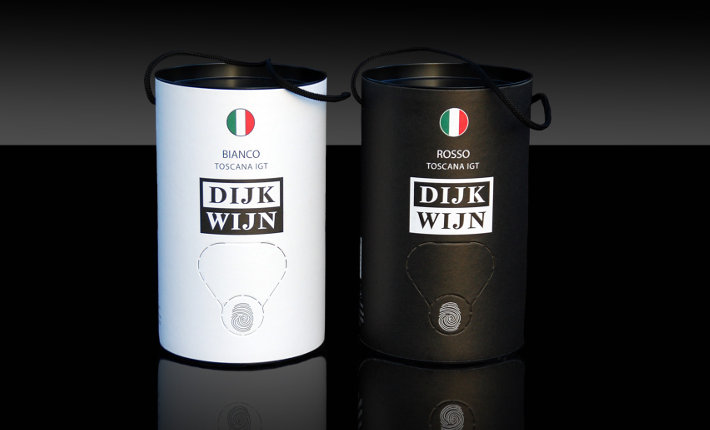
In France we have the ‘vin en vrac’, containers of 5 or 10 liters in which you can buy wine in bulk directly at a winery. In the supermarkets you can also buy the BiB (Bag in Box). The Wine Tube by Dijkwijn is a new sustainable and stylish alternative in this category.
The Wine Tube
The wine tube is filled with sustainably produced wine from traditional wineries. The tube is made from recycled FSC carton and contains the contents of almost three bottles of wine. A smart vacuum system preserves the wine two months after opening. Efficient transport and storage result in lower cost and less CO2 emissions than with a traditional bottle. In addition, the tube stays cool longer and is easier to recycle than glass bottle.
Dijkwijn Bianco and Rosso
Trebbiano and Grechetto grapes from the family Sabbata form the basis for the Dijkwijn Bianco. Wine farmer Primo de Sabbata delivers Sangiovese and Merlot grapes from the Tuscan hills of Arezzo for the Rosso variant.
Who is behind Dijkwijn?
The team consists of Hans van Minnen (quality, logistics, marketing, buying and selling), Sandra Kars (general organization, design, marketing, social media and supporting buying and selling), Michiel Zijlstra (design, websites and online promotion) and Nikaj Pennings (quality, marketing and sales).