Restaurant SILO: as ‘green’ as possible entrepreneurship
22-12-2014
SILO, a new restaurant in Brighton, has got an ‘zero waste’ perspective on sustainable behavior.
According to Douglas McMaster, joint owner of restaurant SILO, there is too much waste and processed food nowadays. That’s why he created SILO, a green restaurant, bakery and a coffee house in one building.
Restaurant SILO reduces waste
Restaurant SILO takes different types of actions to reduce waste. SILO emails the menu to their guests to avoid paper waste. The leftovers are going to a composting machine where it is processed into usable compost. But it doesn’t stop there. The interior is made from repurposed materials, such as used school furniture and scaffolding shelves. SILO created a trendy, green environment to have dinner or to drink coffee.
Sustainable products
McMaster works together with sustainable suppliers. He is in direct contact with local farmers and makes sure that the products aren’t processed. Besides that he works together with a coffee supplier who has his coffee beans shipped by a sailing boat. Interested investors can buy themselves in via Crowd2Fund.
Storytelling about going green
8-12-2014
The Beech Hill hotel provides us with inspiration about telling (future) guests about the efforts they have taken to cherish their location. The hotel is located at the beautiful Lake Windermere in the Lake District in the United Kingdom.
The Beech Hill hotel
At Twitter we spotted this great storytelling about going green. We notice that more and more hotels are going green. The owners of the Beech Hill hotel realize that their guests are coming to enjoy their surroundings and their hospitality. The last couple of years they made changes in the operations of the hotel and reduced the carbon foot print by approximately 463 tonnes of Carbon Dioxide per year. A great example of running the hotel in a sustainable way.
Storytelling about going green
The hotel had a video made about the efforts they have taken to reduce their carbon foot print. The video shows all the details and tells how they carefully run the hotel in a sustainable way. Of course they show the surroundings of their hotel as well.
They installed a Biomass Boiler instead of the previously used 4 large boilers with kerosene as fuel. Replaced their lights with LED lights. In order to reduce waste they reuse and recycle, paper, carboard, glass and furniture. They have been awarded by Trip Advisor with a Bronze Level Green Leader.
Eco-friendly eats
3-11-2014
Julia Soldic, our guest writer about the Scandinavian cuisine, writes about one of her passions: the sustainable food movement.
95% of the world’s ecological food products are being consumed in Europe and North America, leaving us the most conscious eaters in the world . In ten years, the turnover of organic food consumption has tripled worldwide, according to a report conducted by the International Federation of Organic Agriculture Movements. Switzerland is the most eco-friendly country in Europe, closely followed by the gastro country of Scandinavia: Denmark. Sweden and Germany are the runners- up whilst The Netherlands, Belgium and Norway are on a shared seventh place. Consuming eco-friendly goods, in the above countries, is not yet available for the price-sensitive working class, yet perceived as a more luxurious eating habit. What can we do to change this?
Low budget eco-friendly products
In April the Executive Vice-President of the renowned American multinational corporation Walmart revealed the news that a new low budget product line with eco-friendly food will be launched: “We know our customers are interested in purchasing organic products and, traditionally, those customers have had to pay more… We are changing that and creating a new price position for organic groceries that increases access.”
In Scandinavia, larger retail corporations have entered into lifelong supply agreements with ecological farmers supplying Danish supermarkets with sustainable food options – also on their lower shelves. A brave and forward-thinking push!
The Sustainable Restaurant Award 2014
Serving ecological food is simply a result to the known equation: supply is altered after the demand. People want Eco-Friendly Eats, both portrayed in the ingredients on the menu, yet also the restaurant owners shown effort into taking care of the planet. The Sustainable Restaurant Association, in partnership with the World’s 50 Best Restaurants, awarded the Basque restaurant “Azurmendi” the Sustainable Restaurant Award of 2014. Why? Because they care about our planet and still manage to retain Three Michelin Stars. Chef Eneko Atxa leads by example for other restaurateurs by implementing solar panels, showing a massive effort into recycling, portraying free ranged menu items, serving sustainable fish- and a large variety of self-grown organic vegetables. Chef Eneko Atxa; “We have a respect for our greatest supplier: THE EARTH, OUR EARTH.” One can say that chefs like Chef Eneko Atxa, is the sustainable restaurant industry`s reply to a glorified soul like the Catholic Church`s Saint Mother Teresa.
What does this trend mean for the restaurant industry?
Ecological food is still perceived as expensive, gourmet and food for idealists. It is not until we change this idea of ecological food, and make it food for the masses, that we will see the real change in consumer behaviour. In the second largest city of Sweden, Gothenburg, the city’s foodies have taken the matter of running eco-friendly eats to another level, introducing sustainable food panels lecturing startups on how to run a successful, sustainable and organic food operation. “Sustainability isn’t just a moral issue for restaurateurs – it’s fast becoming the hottest trend among hungry consumers”, says restaurateur, author and course initiator, Jens Dolk.
Change is difficult, but by being early adopters and support the rise of ecological agriculture, we will gradually change the idealist into you and me.
Bringing Lost Animals back on the menu
14-10-2014
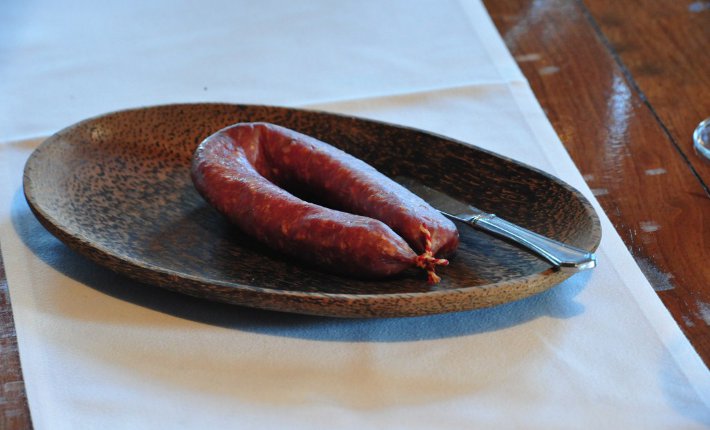
‘Lost animals’ like bull calves, young goats and Jersey bulls are usually destroyed because they have little economic value. Willem Schaafsma of restaurant ‘Eindeloos’, Sicco Gerlsma of restaurant ‘Tandjong Priok’ and butcher Jan Walburg established the ‘Lost Animals’ foundation. This Frisian (north part of the Netherlands) foundation wants to prevent animal cruelty and reduce the waste of these ‘lost animals’. The foundation was launched on 4 October 2014, World Animal Day, at a special lunch in the partially reopened restaurant ‘Tandjong Priok’ in Arum by signing an agreement with a local farmer, cattle dealer and butcher.
Pop-up ‘Region Table’ on a farm
7-10-2014
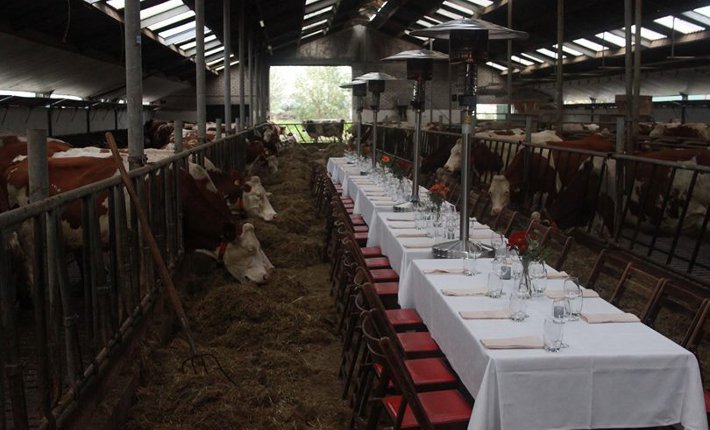
The gentlemen of the Gastrovan prepare a Burgundian meal in the farm of ‘Hoeve Biesland’ in Delfsgauw, The Netherlands, on 10, 11 and 12 October. The stable of the farm will be transformed into a pop-up restaurant that serves 4-course dinners and 3-course lunches. Gastrovan prepares a special menu using fresh organic vegetables of ‘De Groentenboerin’ (The Vegetables Farmer) and the organic beef, lamb and dairy products from the farm itself. The purpose of this event is to get people acquainted in a culinary and educational way with local and organic food.
Having crow for dinner
30-9-2014
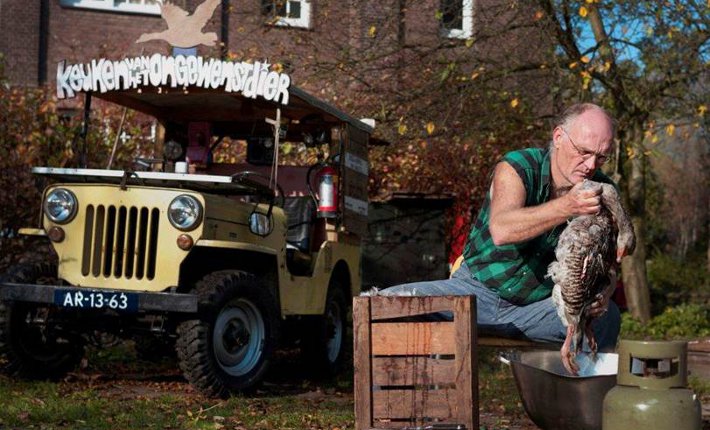
This year, restaurant MOES in Amsterdam and the ‘Keuken van het Ongewenste Dier’ (Kitchen of Unwanted Animals) organize the fourth edition of the unwanted animals dinner on 5 October. As we wrote last year in the article about the Christmas edition, the dinner of unwanted animals is dedicated to animals that are undesired for whatever reason. Examples are gooses, muskrats, crayfishes and the swans. As always, Rob Hagenouw and Nicolle Schatborn (of ‘Keuken van Ongewenste Dieren’) give explanations of why these animals should be eaten. One of the animals that will be on this year’s menu is crow. It is a four course diner, including appetizer, welcome drink and tea/coffee for € 39,50. Reservations can be made via the website of restaurant MOES.
Packaging-free supermarket
19-9-2014
Many initiatives are designed to make supermarkets more sustainable: we have spotted the first dump supermarket in Amsterdam, there is a supermarket chain in Denmark selling local products and we have seen how supermarkets work together with restaurants to reduce their waste.
Bay & Buy
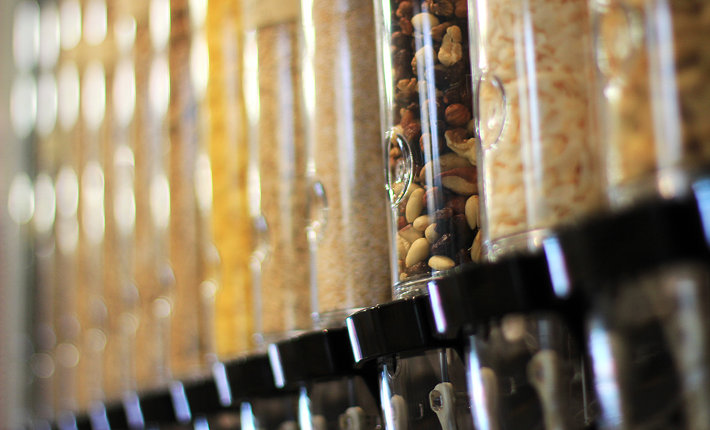
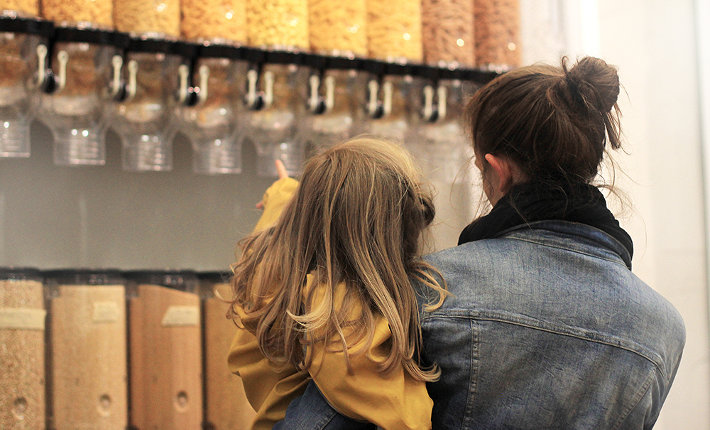
Wim van Dijk hopes to open a new concept through crowdfunding: the first packaging-free supermarket in the Netherlands ‘Bag & Buy’. In this store customers can pick their own products from containers, barrels and jars and can thereby determine the amount they need.
International developments
A comparable initiative can be found in several countries. In Germany packaging-free supermarket ‘Original Unverpackt‘ was funded by crowdfunding as well. The starting capital for this supermarket was collected in one day. Earlier this year ‘Robuust, the zero waste shop’ opened its doors in Antwerp and in France, Spain and Austria are a packaging-free grocery stores as well.
The crowdfunding for the supermarket ‘Bag & Buy’ in the Netherlands starts on 1 October. The crowdfunders also determine the location of this store: “Bag & Buy will open where there is the must enthusiasm” as said by Wim van Dijk. The initiator thinks he will need € 100.000,- to open the grocery store.
The Future Hotel
18-9-2014
Researchers of the Fraunhofer Institute IAO developed a ‘Future Hotel’ together with partners from the hotel and their supply industry. Via the video you get a brief impression of the future opportunities for a hotel room. Examples are a mobile check-in via a smartphone; round shapes in the hotel room; innovative communication systems, systems that are voice controlled; the fiber of the glass that could be adjusted from see through to non transparent; the ability to change the color of the room; taps with a light and temperature display and a whirlpool with a heated wall, by infrared. The hotel bed of the future (‘an energy-bed’) provides an electric motor for swing movements that makes guests fall asleep more easily and rise and shine the next morning.
We have seen more hotel rooms of the future, striking similarities are the round curves in architecture, the use of the smartphone and the tap and the possibilities of changing the color in the room. We didn’t see the ‘energy-bed’ before…
In February 2013, another future hotel room was presented at the Fiturtech, the International Tourism Trade Fair, in Madrid, that was called the ‘ITH Room Xperience’.
Bionina the organic drink
11-9-2014
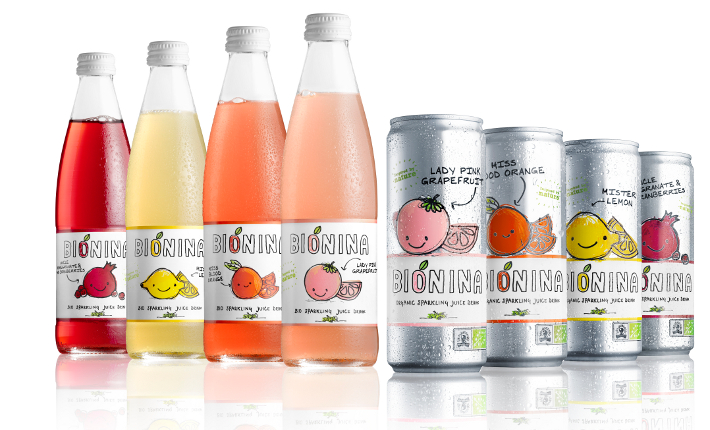
Bionina is an organic drink made of fresh fruit and sparkling water. The ingredients find their origin in Italy. The mineral water is from the Italian mountains and the fruit is from the organic farms in Sicily. No colorants, fragrances, preservatives and flavoring are added to the drink. Bionina is available in four distinctive flavors: cranberry/pomegranate, blood orange, grapefruit and lemon. Another trendy, non-alcoholic drink.
The potato store in Amsterdam
10-9-2014
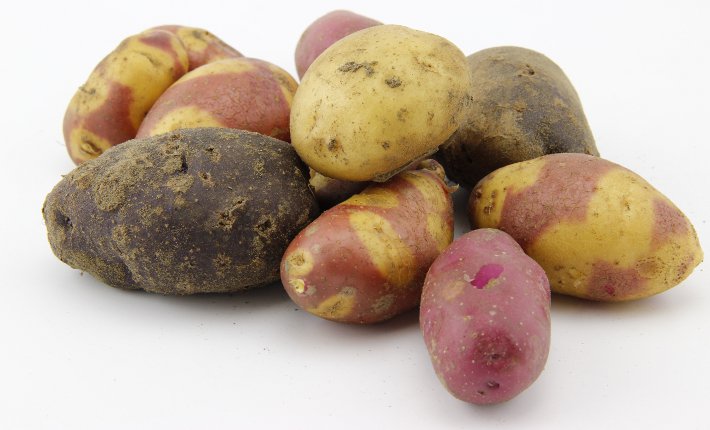
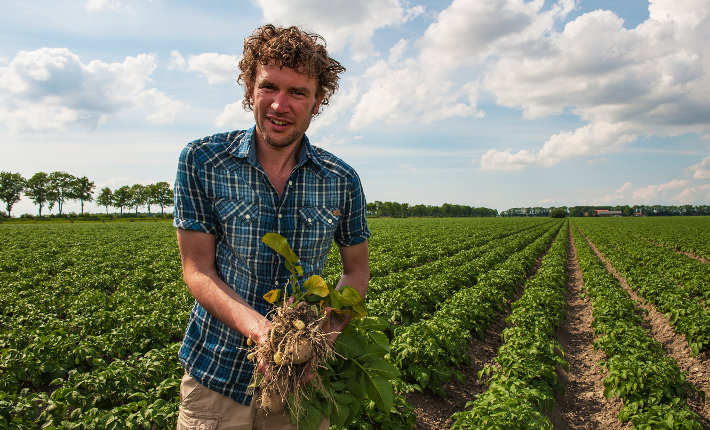
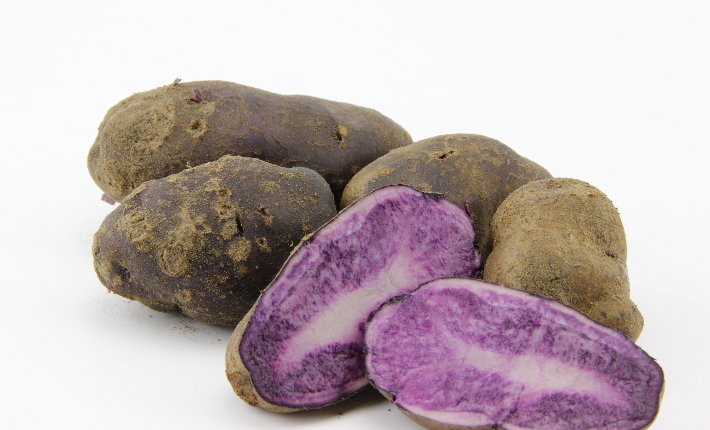
A temporary potato store will open in Amsterdam on 26 September. The pop-up store ‘Pieperboetiek’ (pieper is a Dutch nickname for a potato) will be opened for two weeks and is dedicated to potatoes. Besides giving information, 30 kinds of potatoes are sold as well. All types of potatoes are organic and grown locally in the Netherlands. The goal of the store is to reduce the gap between the city and countryside. Visitors can ask questions to potato farmers, a fries-debate is held and a potato dinner is organized. The ‘Pieperboetiek’ is an initiative of Krispijn van den Dries, a biodynamic farmer and slightly a potato activist. Earlier Krispijn protested against the low prizes of potatoes by dumping 6.000 kilos of potatoes on the Dam in Amsterdam. Krispijn is, together with city farmer and journalist Felicia Alberding and the Youth Food Movement, committed to an honest food system and better relationships between the city and the countryside.