The Noorderparkbar in Amsterdam, opened in April 2012, is financed by crowd-funding. Designers Bureau SLA and Overtreders W decided to save expenses by using 100% second-hand materials. An ancient Japanese technique, shou sugi ban, was used to produce a cost-effective, low-maintenance exterior cladding of charred wood. More pictures on The Pop-Up City.


This September (10-16), London will feast on the fabulous local produce being grown, produced and cooked on its doorstep, with the capital city’s first Urban Food Week . The week of activities is being organised to highlight the importance of buying and eating local food, urban growing and planting forage for bees. During the week, restaurants, cafés, bars and pubs across the city will be showcasing dishes and drinks made with ultra-local fruit, veg and herbs from urban farms, and from London honey cultivated in community beehives.
The Royal Cliff Beach Resort in Pattaya, Thailand, has been awarded the ISO 14001 certification (internationally recognised Environmental Management System (EMS)). As guest, you will notice this by the laundry request (almost standard nowadays) and for example by a recyclable and unrecyclable wastebin in the room.
Starbucks works together with biorefinery scientists to transform food waste into key ingredients for laundry detergent, plastics and other everyday products. The coffee makers announced this at the 244th National Meeting & Exposition of the American Chemical Society’. As mentioned before Starbucks was already involved in local projects before like the use of coffee grounds for growing mushrooms.
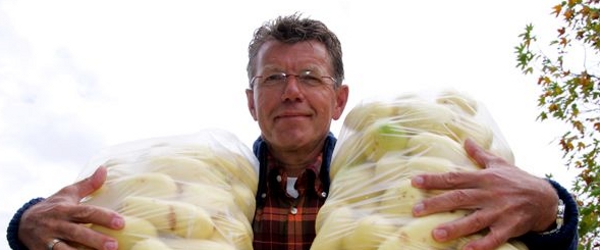
In The Netherlands we have a lot of snackbars (kind of Chips shops), a famous snackbar in Rotterdam, Bram Ladage, organizes a ‘get familiar with the origine of your fries’ day on the 8th of September. Anyone interested can join his team at a potatoe farm in Numansdorp to lift some potatoes. These potatoes are processed into chips on the spot. Bram Ladage also auctions the first crate new harvest potatoes, the revenue of this crate goes to the Sophia Childrenhospital in Rotterdam. And some golden potatoes are hidden in the field for extra prizes.
The Japanese company Daiwa House Industry developed the Agri-Cube; a unit that fits a standard parking place, which can be used to cultivate several types of vegetables. The temperature, the fertilization and drainage can automatically be controlled. This unit is especially suitable for leafy vegetables such as lettuce. Lettuce heads can be grown within 42 days.
Goodss Passion designed recycle bins with lids in the shape of a bottle, tin can and carton as a universal language. They think that use of shapes instead of color codes, icons or text makes recycling less boring.
The London Soho community wants to cut back the use of plastic straws with the ‘Straw Wars’ campaign. This way they prevent that the straws will end up in the environment.
The vegetable glass house of restaurant Vork & Mes is the location of the Groen, Groener, Groente! food congress on September the 24th. Chef Jonathan Karpathios grows most of the vegetables for the restaurant himself and the menu consists 80 percent out of vegetables. After the congress there is a talkshow in Vork & Mes with Niven Kunz, Brenda Frunt, Ruud Wunneberg and Harold Hamersma.
Approachable inspiration, trends and highlights from 2025 that can be easily applied to your own business in 2026. A whitepaper to scroll through when you read more
We’ve been enjoying glorious summer weather for a few weeks now, and the popular seasonal drinks are already known. Mocktails, cocktails, spritz variations, rosé, and read more

The Noorderparkbar in Amsterdam, opened in April 2012, is financed by crowd-funding. Designers Bureau SLA and Overtreders W decided to save expenses by using 100% second-hand materials. An ancient Japanese technique, shou sugi ban, was used to produce a cost-effective, low-maintenance exterior cladding of charred wood. More pictures on The Pop-Up City.
This September (10-16), London will feast on the fabulous local produce being grown, produced and cooked on its doorstep, with the capital city’s first Urban Food Week . The week of activities is being organised to highlight the importance of buying and eating local food, urban growing and planting forage for bees. During the week, restaurants, cafés, bars and pubs across the city will be showcasing dishes and drinks made with ultra-local fruit, veg and herbs from urban farms, and from London honey cultivated in community beehives.
The Royal Cliff Beach Resort in Pattaya, Thailand, has been awarded the ISO 14001 certification (internationally recognised Environmental Management System (EMS)). As guest, you will notice this by the laundry request (almost standard nowadays) and for example by a recyclable and unrecyclable wastebin in the room.
Starbucks works together with biorefinery scientists to transform food waste into key ingredients for laundry detergent, plastics and other everyday products. The coffee makers announced this at the 244th National Meeting & Exposition of the American Chemical Society’. As mentioned before Starbucks was already involved in local projects before like the use of coffee grounds for growing mushrooms.
In The Netherlands we have a lot of snackbars (kind of Chips shops), a famous snackbar in Rotterdam, Bram Ladage, organizes a ‘get familiar with the origine of your fries’ day on the 8th of September. Anyone interested can join his team at a potatoe farm in Numansdorp to lift some potatoes. These potatoes are processed into chips on the spot. Bram Ladage also auctions the first crate new harvest potatoes, the revenue of this crate goes to the Sophia Childrenhospital in Rotterdam. And some golden potatoes are hidden in the field for extra prizes.
The Japanese company Daiwa House Industry developed the Agri-Cube; a unit that fits a standard parking place, which can be used to cultivate several types of vegetables. The temperature, the fertilization and drainage can automatically be controlled. This unit is especially suitable for leafy vegetables such as lettuce. Lettuce heads can be grown within 42 days.
Goodss Passion designed recycle bins with lids in the shape of a bottle, tin can and carton as a universal language. They think that use of shapes instead of color codes, icons or text makes recycling less boring.
The London Soho community wants to cut back the use of plastic straws with the ‘Straw Wars’ campaign. This way they prevent that the straws will end up in the environment.
The vegetable glass house of restaurant Vork & Mes is the location of the Groen, Groener, Groente! food congress on September the 24th. Chef Jonathan Karpathios grows most of the vegetables for the restaurant himself and the menu consists 80 percent out of vegetables. After the congress there is a talkshow in Vork & Mes with Niven Kunz, Brenda Frunt, Ruud Wunneberg and Harold Hamersma.
Bezoek horecatrends op